
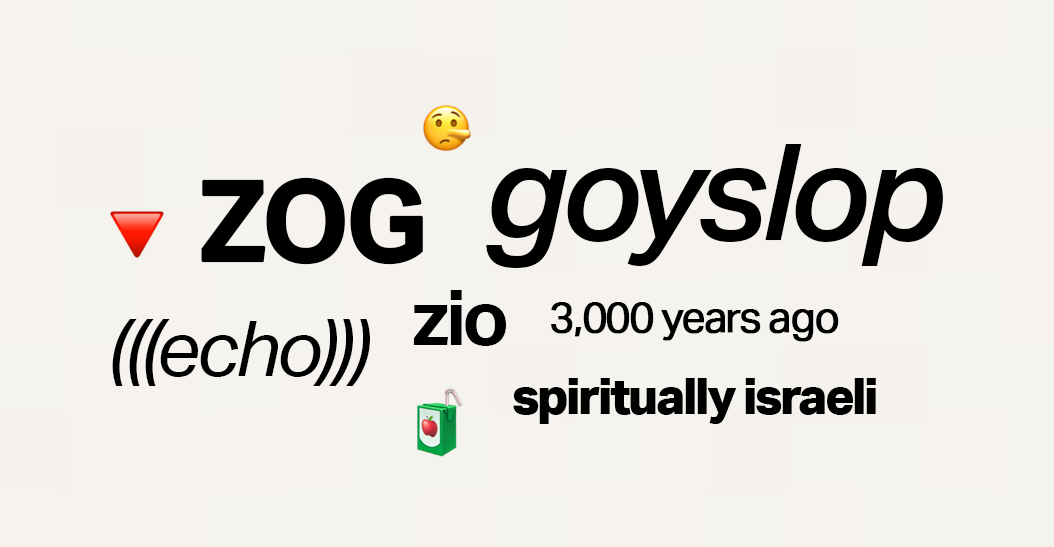
Unpacking common antisemitic memes and dog whistles trending on social media.
Digital Antisemitism 101.
Antisemitism is highly adaptable. Online, it can appear as a meme, slang term, emoji, image, sound, or seemingly innocuous joke. To netizens, antisemitic ideas may first appear not as explicit hatred, but as a meme, comment, TikTok sound, or inside joke. Because memes are easily copied, modified, and detached from their original context, these ideas can spread far beyond the communities that created them.
What’s a meme?
A meme is cultural material that can be copied, modified, and redeployed through shared references. That adaptability makes memes useful for antisemitism: an old stereotype can take on a new image, a conspiracy theory can become a two-word joke, a slur can be replaced with an emoji, or an antisemitic image can circulate without explanation.
The result is antisemitism that can be both recognizable and deniable. Someone can repeat an antisemitic meme while claiming they were “just joking,” while someone unfamiliar with the reference may see nothing objectionable. Platforms can also struggle to distinguish ordinary uses of words or images from their use as antisemitic signals.
What’s a dog whistle?
A dog whistle is a word, phrase, image, or symbol that communicates a message recognizable to a particular audience while appearing neutral or ambiguous to outsiders. The term comes from the idea of a dog whistle: a sound that people cannot hear, but dogs can. Online, dog whistles can allow antisemitic ideas to circulate while providing plausible deniability. The person using the reference can insist that the words themselves are harmless, even when the intended audience understands the underlying message. Dog whistles should therefore be understood through context and usage.
Common examples of digital antisemitism.
“Well, well, well.”
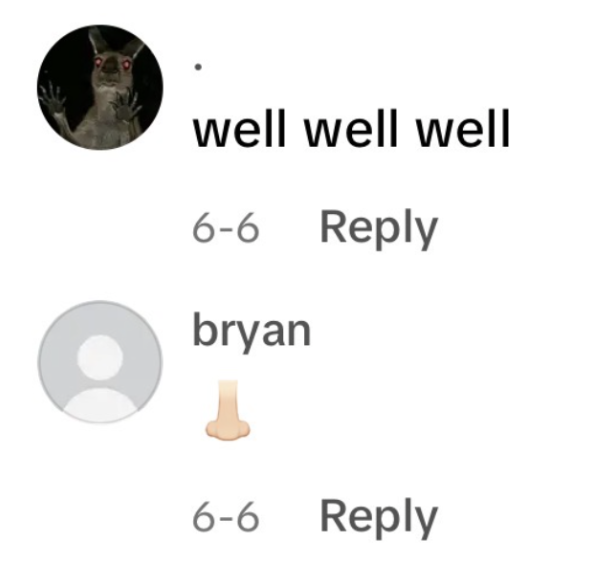
“Well, well, well” is an example of an apparently ordinary phrase that has acquired a coded meaning online. The phrase has been repeatedly used in antisemitic comments responding to content involving Jews. In this context, it communicates the idea that a person's behavior is unsurprising because the person is Jewish: essentially, “They are Jewish, so this behavior is to be expected.” The phrase itself is completely innocuous. Its meaning comes from the context in which it is deployed and the stereotype it invokes.
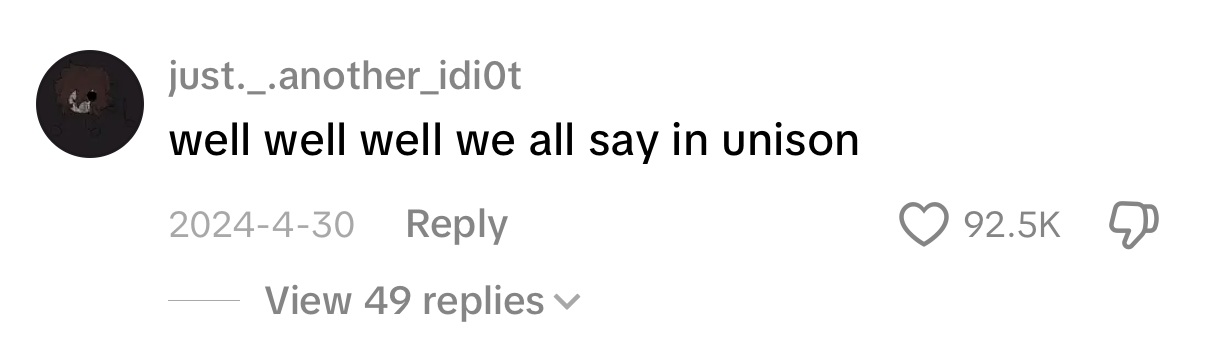
Comments posted under antisemitic TikTok video. Screenshot from Jewish on Campus researcher.
“Promised 3,000 years ago.”
The “promised 3,000 years ago” meme draws on Jewish historical and religious connections to the Land of Israel and the concept of the Promised Land. It portrays Jews as claiming ownership of unrelated objects, places, people, or countries on the basis that they were supposedly “promised” to Jews thousands of years ago. Some versions use AI-generated videos or stereotyped depictions of Orthodox Jewish men. Examples have included Jews or Israelis supposedly claiming ownership of cities, cars, soda cans, babies, dogs, and even the Moon. Although the meme is often framed around Israelis or Israel rather than Jews explicitly, its core joke relies on an older antisemitic stereotype portraying Jews as inherently possessive, entitled, and eager to claim ownership of everything.
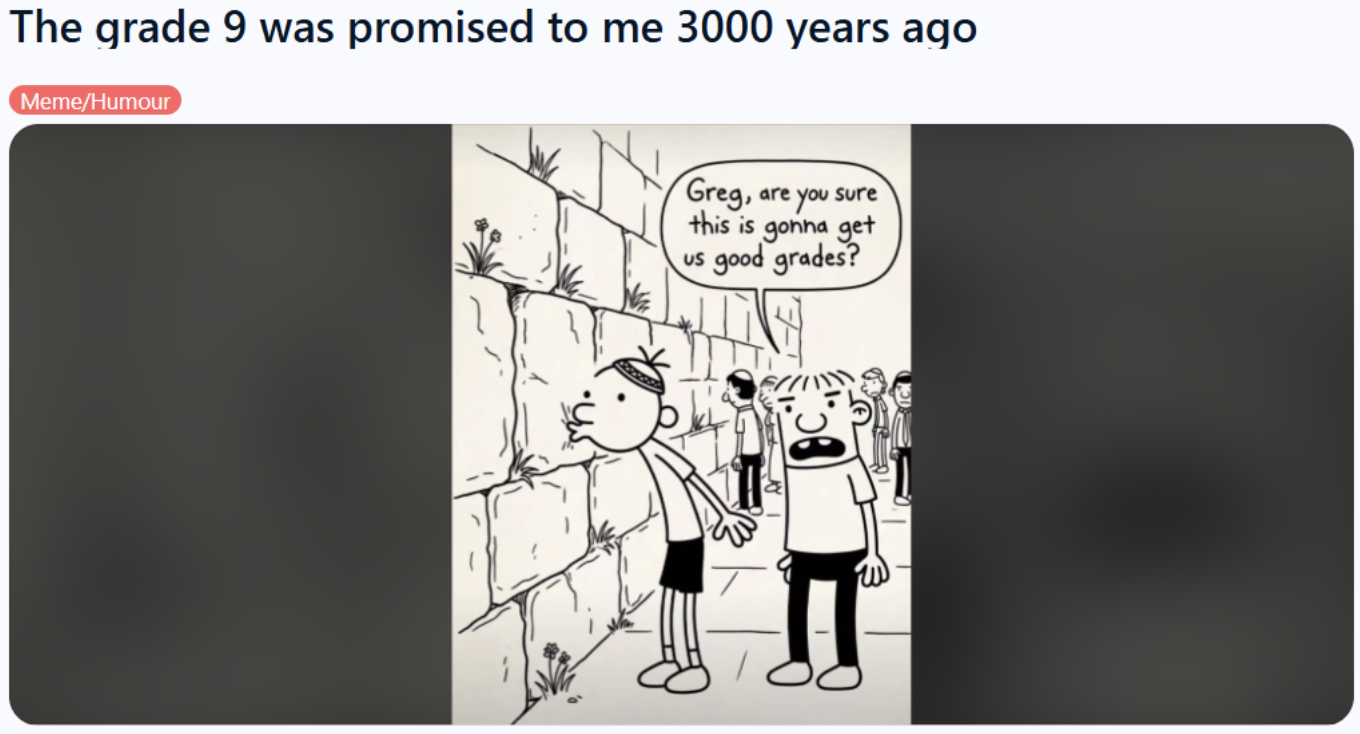
Screenshot of Reddit r/GCSE from Jewish on Campus researcher.
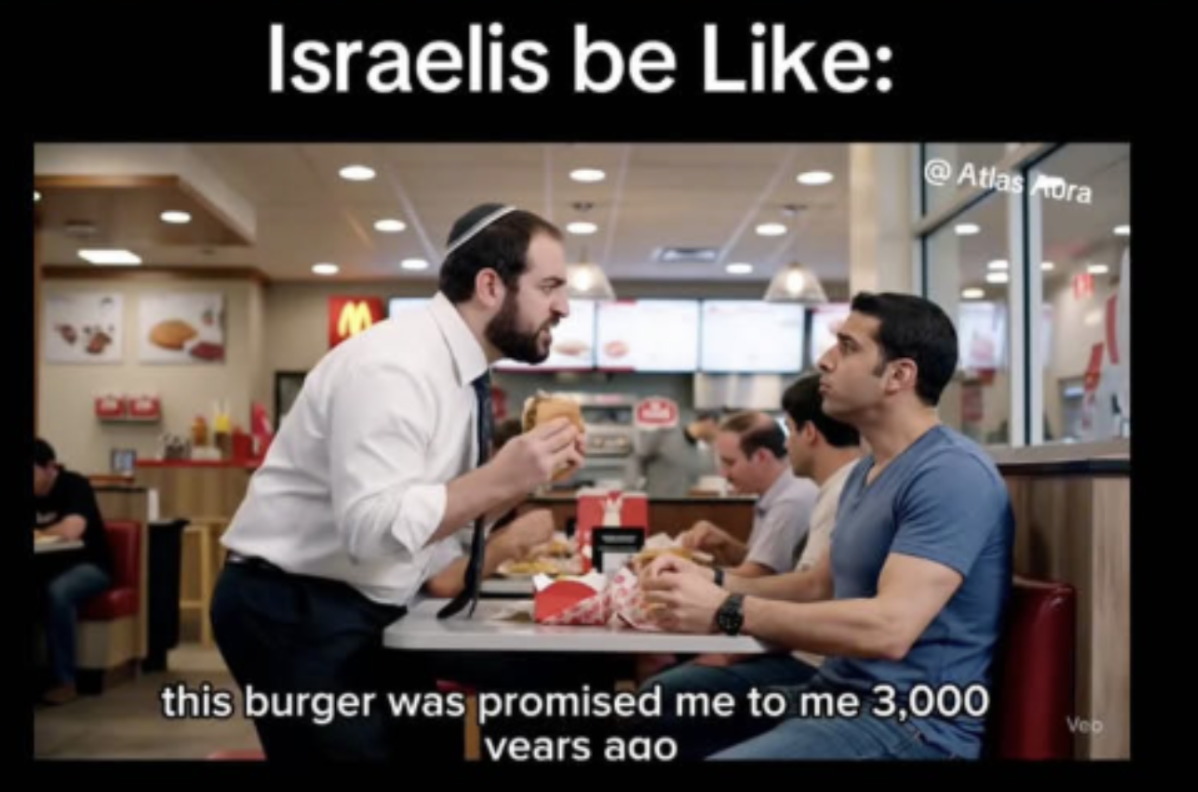
Screenshot of meme from Jewish on Campus researcher.
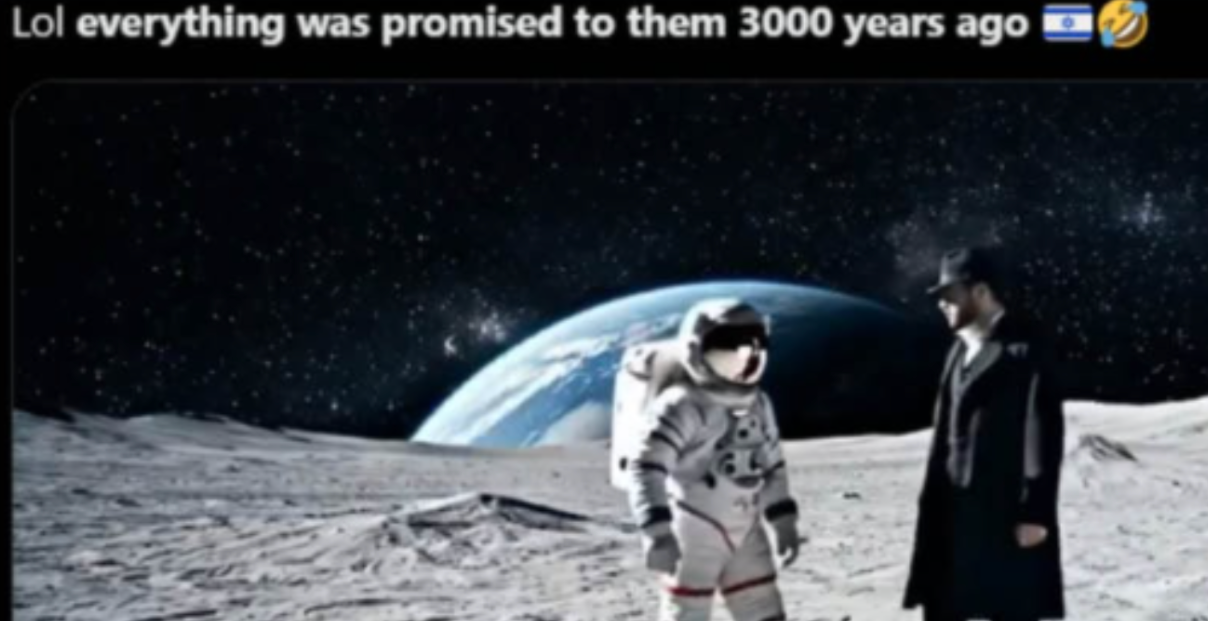
Posted on X (Formerly Twitter). Screenshot from Jewish on Campus researcher.
“Spiritually Israeli.”
“Spiritually Israeli” is a phrase that emerged in 2025 and became increasingly visible on social media in 2026. It is used to describe something a speaker considers vapid, artificial, commercially driven, suspicious, soulless, or inauthentic. The phrase has been applied to celebrities, musicians, consumer products, entertainment, internet trends, matcha drinks, QR-code menus, video games, and other things with no inherent connection to Israel. Its antisemitic dimension extends beyond the use of “Israeli” as a generic negative adjective. The insult draws on broader antisemitic ideas that Jewish culture or identity is artificial, fabricated, deceptive, or inauthentic. This plays into a long history of portraying Jews as impostors, manipulators, or people who falsely claim identities and belonging. Related formulations such as “Made in Tel Aviv” similarly use Israeli identity as shorthand for something fake, manufactured, or deceptive.
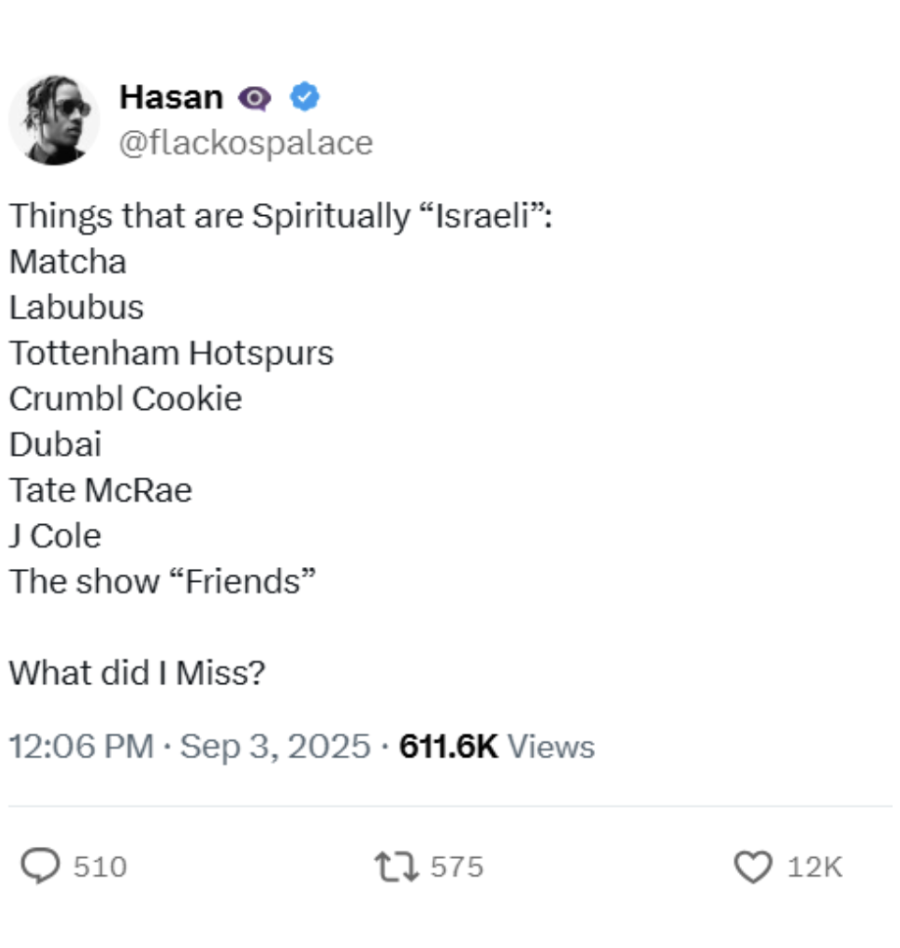
Posted on X (Formerly Twitter). Screenshot from Jewish on Campus researcher.
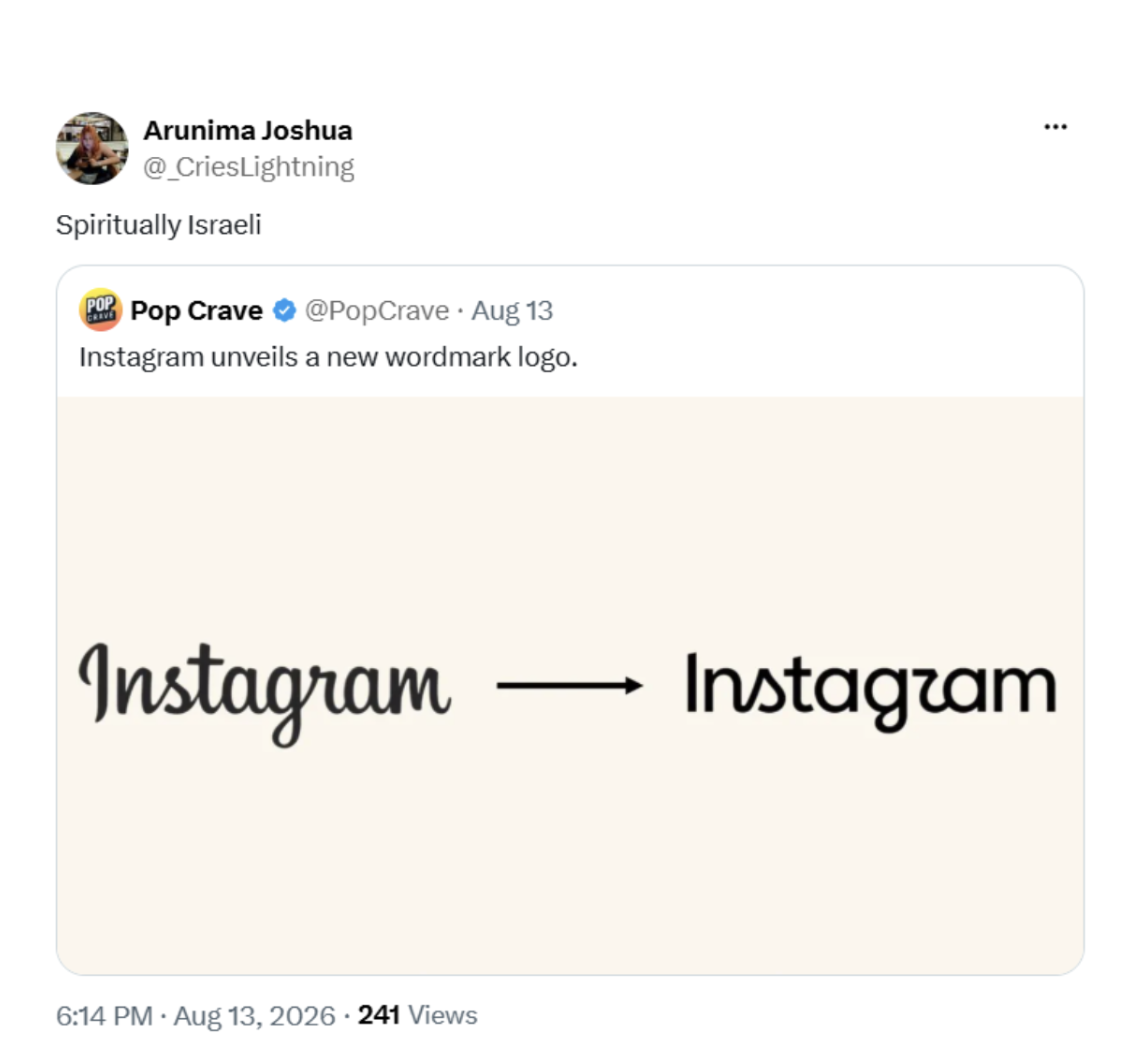
Posted on X (Formerly Twitter). Screenshot from Jewish on Campus researcher.
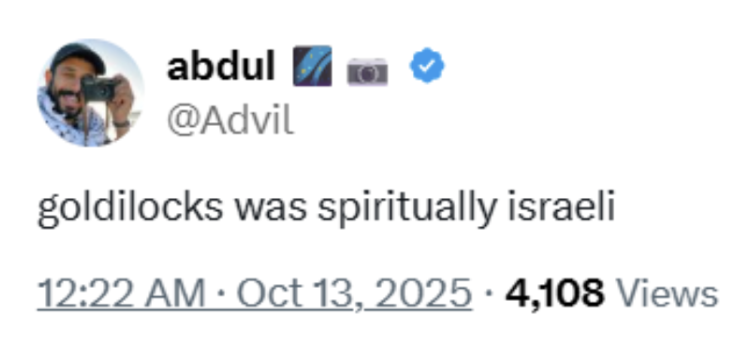
Posted on X (Formerly Twitter). Screenshot from Jewish on Campus researcher.
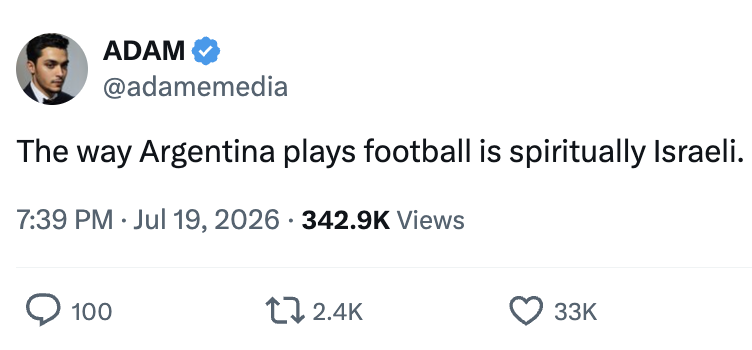
Posted on X (Formerly Twitter). Screenshot from Jewish on Campus researcher.
“Goyslop” and “ZOGslop.”
“Goyslop” is an example of how internet slang can encode an antisemitic conspiracy theory. The word combines “goy,” a Hebrew and Yiddish term for a non-Jew, with “slop,” internet slang for low-quality or undesirable content. The term describes mass-produced or low-quality food, entertainment, and other consumer products, often implying that Jewish elites deliberately produce or promote this material to keep non-Jews unhealthy, distracted, or controllable. The related term “ZOGslop” uses the acronym derived from “Zionist Occupied Government,” a conspiracy theory alleging that governments are secretly controlled by Jews or Zionists.
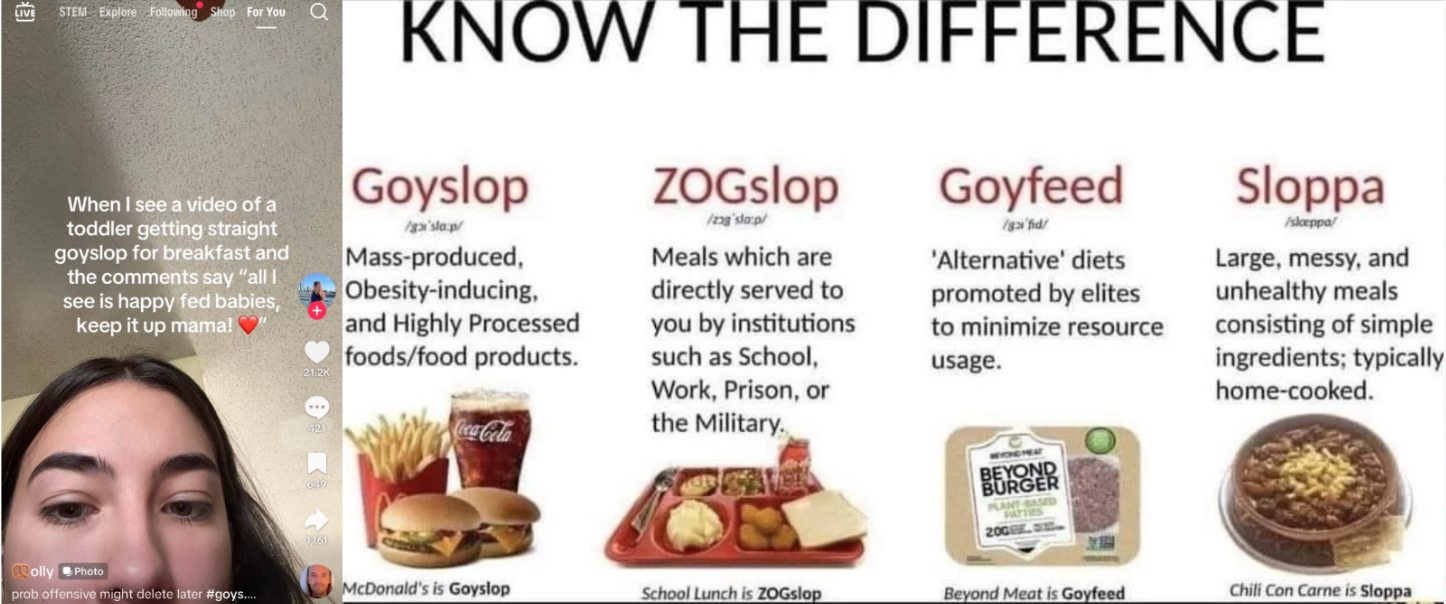
Screenshots from TikTok (left) and Threads (right) found by Jewish on Campus researcher.
“Jew, Jew, Jew.”
A clip of conspiracy theorist Alex Jones repeatedly saying “Jew” has circulated online as a meme and reaction sound. The repeated use of “Jew” is the punchline. The absurdity of the format does not eliminate its antisemitic potential. In meme culture, repetition can turn the use of an identity category into a form of mockery, even when no explicit argument is attached to it.

GIF found by Jewish on Campus researcher.
The Happy Merchant.
One of the best-known antisemitic memes on the internet, this image depicts a Jewish man with exaggerated stereotypical facial features, a large nose, facial hair, and a grin while rubbing his hands together. It draws on longstanding antisemitic stereotypes portraying Jews as greedy, manipulative, money-obsessed, and scheming. The image originated in racist and antisemitic cartooning and was subsequently cropped, modified, and widely circulated through online forums, including 4chan, where it became particularly prominent in white-supremacist and antisemitic online communities. Its imagery has also appeared in mainstream popular culture; in 2014, Macklemore appeared on stage in a prosthetic nose and wig that resembled the meme. Macklemore said he thought he looked “like Humpty Hump with a bowl cut” and denied any connection to the meme, illustrating how antisemitic imagery can circulate through popular culture under the cover of alternative explanations or plausible deniability.
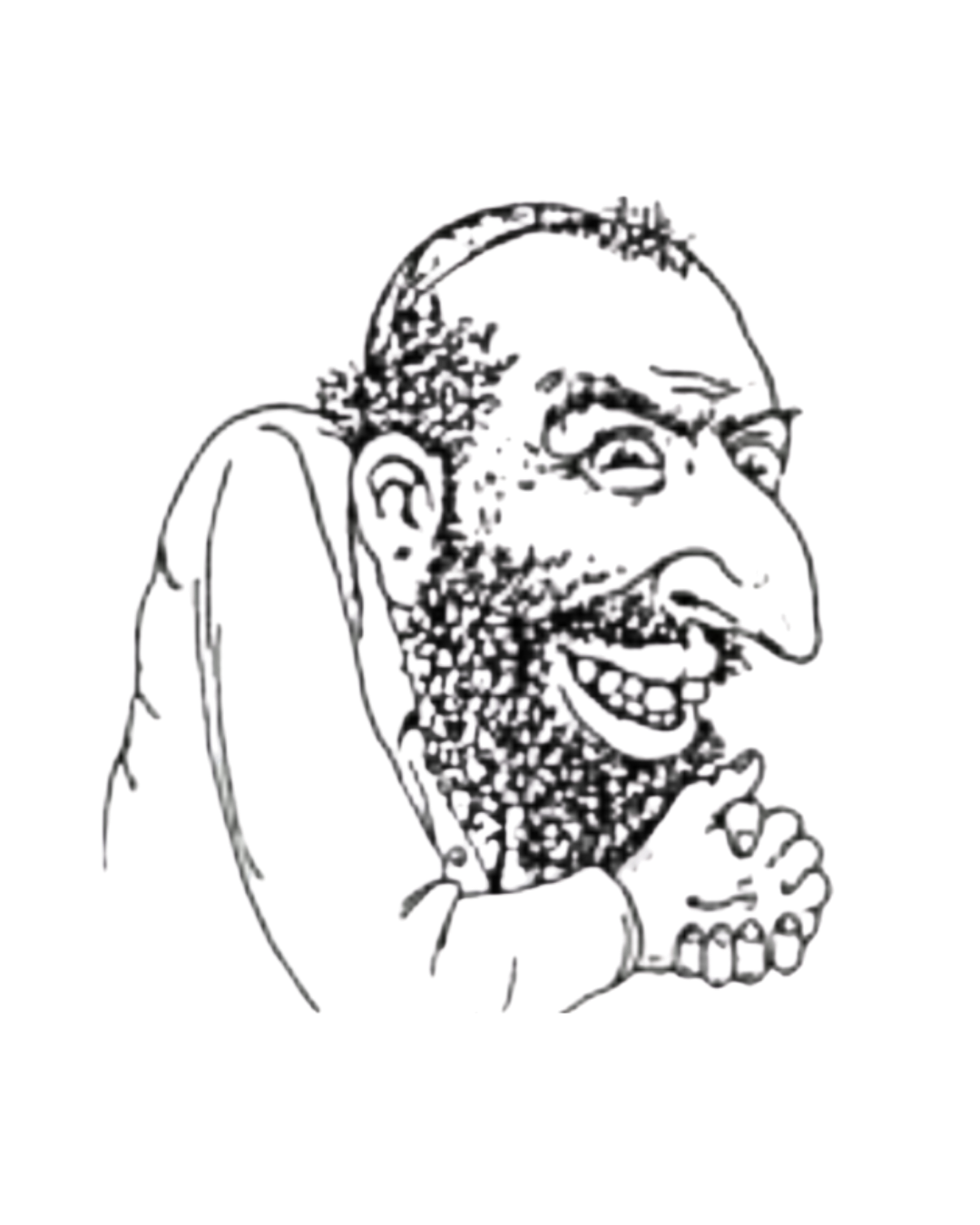
“Dancing Israelis.”
This refers to an antisemitic conspiracy theory claiming that five Israeli nationals who were detained in the United States after the September 11 attacks were responsible for the tragedy, and is frequently expanded into claims that Israel or Mossad was responsible for 9/11.
🧃 The juice box is used as a coded reference to Jews because “juice” sounds similar to “Jew” when spoken.
🐀 The rat emoji invokes the longstanding antisemitic portrayal of Jews as rats or vermin.
👃 The nose emoji invokes the antisemitic stereotype that Jews have unusually large or distinctive noses.
🍪 The cookie emoji appears in Holocaust-related antisemitic humor, including references to the murder of Jews in Nazi gas chambers and crematoria.
🪁 The kite emoji is used as a coded substitute for an antisemitic slur because of the similarity between the words.
🧼 The soap emoji invokes the false claim that the Nazis systematically manufactured soap from the bodies of murdered Jews.
🔻The inverted red triangle is a symbol used by the al-Qassam Brigade, Hamas’ military wing, to denote military targets in videos of attack operations. It is used to covertly target Jewish organizations, institutions, and community members.
Emojis and Visual Codes.

Screenshots on TikTok found by Jewish on Campus researcher.
These meanings are context-dependent. A rat emoji, a bar of soap, or a cookie is not evidence of antisemitism on its own. The significance comes from how the symbol is deployed, what it accompanies, and whether the people using it share an established coded meaning.
(((Echo.)))
The triple parentheses, commonly called the “echo,” are a longstanding antisemitic online symbol. Jewish individuals, organizations, or names may be placed inside three sets of parentheses: (((Name))). The symbol became particularly visible in the mid-2010s as white-supremacist and antisemitic users employed it to identify and target Jewish journalists and other public figures online. It was based on the idea that Jewish influence supposedly “echoes” through history, reflecting the antisemitic conspiracy theory that Jews exercise disproportionate control over institutions, media, finance, or society. Some Jewish users subsequently reclaimed the symbol as an act of solidarity.
Digital antisemitism is often deliberately ambiguous. A phrase, emoji, image, or meme may appear harmless to someone unfamiliar with its history, yet carry a specific meaning within an online subculture.
Recognizing digital antisemitism therefore requires looking at patterns rather than isolated words. Ask:
Who is being targeted?
What other images, phrases, or references appear alongside the content?
What stereotype or conspiracy theory does the joke rely upon?
Does the reference have an established meaning within an antisemitic community?
The distinction between context and content is especially important online. A word can be ordinary in one context and a dog whistle in another. A meme can be used innocently by one person and deliberately antisemitically by another. A symbol can even be reclaimed by the people it was originally used to target.
Antisemitism is not static. Like a virus, it adapts and mutates: sometimes recognizable, sometimes disguised. Online, it is often disguised. Digital antisemitism does not always announce itself openly; it can be embedded in irony, memes, slang, sounds, emojis, and visual culture, allowing antisemitic ideas to circulate while retaining plausible deniability. The form may change, but the underlying stereotype can remain. This adaptability is what allows antisemitism to move across platforms, subcultures, and generations while taking on new language and new forms.