
Purim vs. Hanukkah Antisemitism.
Antisemitism mutates across history. In her work People Love Dead Jews, scholar Dara Horn outlines a vital framework for understanding anti-Jewish hostility by examining the foundational stories behind two major Jewish holidays: Purim and Hanukkah.
Purim Antisemitism.
Purim antisemitism represents anti-Jewish hostility in its most explicit, absolute form. Its biblical origin lies in the Book of Esther, where the royal Persian advisor Haman plotted the total annihilation of every Jewish man, woman, and child across an empire stretching from Ethiopia to India. In this paradigm, there are no conditions for survival, no ideological compromises to be made, and no room for assimilation. Haman did not ask Jews to change their beliefs or surrender their practices; physical existence itself was treated as an unpardonable crime. The goal of Purim antisemitism is the absolute destruction of the Jewish body.
History is littered with clear and undeniable examples of Purim antisemitism. Centuries of blood libel accusations were used to try to diminish local Jewish populations. Within the past century, violent pogroms such as the Farhud in Iraq have affected Sephardic and Mizrahi communities. The systematic genocide of the Holocaust is one of the clearest examples of Purim antisemitism in recent memory, with the “Final Solution” calling for a complete eradication of the Jewish people.
Deadly Purim antisemitism did not end with the Holocaust. In Poland, in July 1946, at least 42 Jews were killed following on a local boy’s blatantly false accusation. Examples from just the past decade include mass shootings at the Tree of Life Synagogue in Pittsburgh in October 2018; the Chabad of Poway in California in April 2019; and Bondi Beach, Sydney, Australia, in December 2025. It also surfaces in public neo-Nazi demonstrations, swastika vandalism of synagogues, and calls for violence.
Hanukkah Antisemitism.
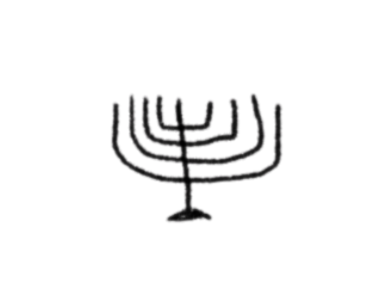
Hanukkah antisemitism operates through the subtler, coercive mechanisms of identity erasure and conditional acceptance. The holiday of Hanukkah commemorates the rededication of the Holy Temple in Jerusalem following the Maccabean Revolt against the Seleucid Greek Empire. King Antiochus IV sought to subjugate his Jewish subjects by outlawing Torah study, banning Sabbath observance, forcing the worship of Greek idols, and compelling the violation of Jewish law. As Horn observes, Hanukkah antisemitism targets the Jewish soul rather than the Jewish body, seeking to dismantle Jewish civilization while leaving the “de-Jewed bodies” of its former practitioners intact. It offers Jews social inclusion, but only on the strict condition that they discard fundamental components of their faith, culture, and self-determination.
This pattern of coercive assimilation repeated across centuries, from forced conversions during the Spanish Inquisition to Tsar Nicholas I’s forced conscription of young Jewish cantonists. Under the Soviet Union, religious practice was systematically suppressed, Hebrew was banned, and synagogues were shuttered. The Soviet state even published “Red Haggadahs” for Passover, replacing belief in God with pledges of faith in the Communist Party, baiting Jews with promises of societal inclusion only to strip away their authentic heritage.
In each instance, authority figures offered Jews a Faustian bargain: relinquish your distinct heritage and identity, and you will be permitted to survive as a recognized member of the collective.
Today, Hanukkah antisemitism frequently disguises itself as enlightened progressivism. Jewish individuals face litmus tests, frequently granted social acceptance only if they disavow Zionism—the movement for Jewish self-determination in their ancestral homeland, Israel—or sever ties with community organizations. Jews are welcome, provided they strip away aspects of their heritage that society deems unacceptable.
Purim antisemitism and Hanukkah antisemitism are not isolated, standalone phenomena.
Historical precedent demonstrates that when Hanukkah antisemitism is normalized, it metastasizes into Purim antisemitism as societal guardrails erode.
As Dara Horn observes throughout her work, the true antidote to both forms of hostility is to live authentically and unconditionally. We defy Purim antisemitism by surviving; we defeat Hanukkah antisemitism by thriving.
We proudly build Jewish lives, honor our traditions, and carry forward a multi-thousand-year legacy on our own terms. Against the persistent demand to strip away our identity or to continually prove our right to exist, the most radical act of resistance is to fully inhabit our living heritage.